

Coaches unsure about seeding format

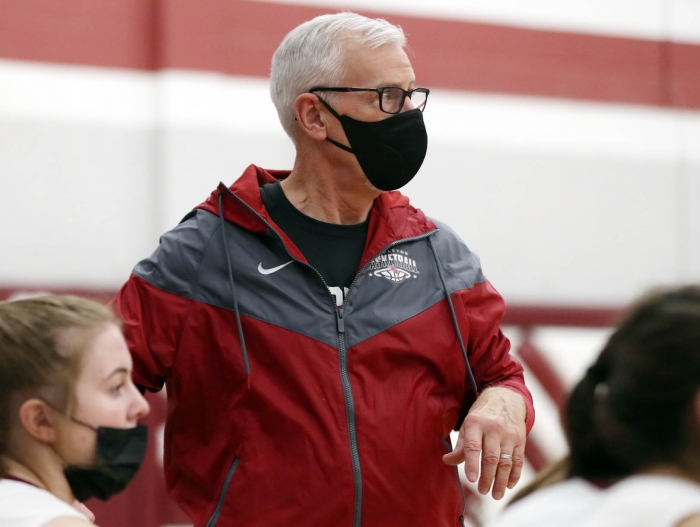
There were coaches that loved trying to “sell” their teams to the crowd and earn a higher seed.
Others strongly disliked the “salesmanship” that was involved.
Some felt the voting was done fairly and with integrity. Others believed some coaches tried maneuvering positions to benefit their team.
Regardless, the days of coaches voting on the seeds for the WIAA postseason basketball tournament are over. For the first time ever, the seeds in each sectional will be determined by computers.
The girls tournament will be seeded this weekend, while the boys will be seeded on Feb. 19-20.
And as coaches enter this new world, their feelings seem to range from cynical to apprehensive to optimistic.
“I am OK with it and will be interested to see how it all works out,” said Jeff Kind, who coaches Middleton’s girls. “I won’t miss the salesmanship part. It was hard trying to evaluate strength of conferences, strength of schedule, etc. and there were always disagreements.”
Tom Lesar, the girls coach at Mount Horeb, believes the new system could be a good thing.
“I am glad they've switched to a new format,” Lesar said. “I think for the most part the old system was good, but it had its flaws.
“The majority of coaches voted in accordance with the WIAA criteria — regardless of whether or not it might put their team in a less favorable matchup. But there certainly were some that would purposefully rank teams higher or lower to improve their matchup. I personally won't miss the 'sales job' talk about our season.”
Sean McGann, the boys coach at Sauk Prairie, sees good and bad in the new model.
“It definitely has its pros and cons,” McGann said of the new format. “I like the fact that we do not have to be a salesman. I feel at times there is a lot of bias in the room and it can favor one team over the other.
“It also eliminates the ‘we are playing our best basketball now’ argument that irritates me. The seeding process should reflect the entire season, not just the games you want it to reflect.”
According to WIAA Communications Director Todd Clark, electronic seeding will be based on the following factors:
(1) Own winning percentage
(2) Opponents’ winning percentage
(3) Opponents’ Opponent’s winning percentage
(4) Defeated Opponents’ winning percentage
(5) Defeated Opponents’ Opponent’s winning percentage
(6) Own winning percentage vs. teams in Regional/Sectional grouping
The girls seeds will be released Monday, Feb. 14, while the boys seeds will be released on Feb. 21.
“This being my first year I have no experience with the old way,” Wisconsin Heights girls coach Dustan Baldassari said. “We did virtual voting for all conference selections in football and I wished we would have had the opportunity to speak about each player and ‘sell’ them to the other coaches.”
Jacob Breunig, the first-year girls coach at Sauk Prairie, also liked having the chance to make a pitch for his team.
“I enjoyed the seeding meetings when I was a varsity assistant,” Breunig said. “Coaches had the opportunity to fight for their team and make points that a computer may be unaware of, so it will be interesting.
“Especially in a Covid year, some teams may have lost a key player or players for some games and that is not really factored in. Instead they just look at wins and losses more. I think the computer spitting out the seeds will make it interesting.”
What has coaches scratching their heads is the WIAA has refused to say how much each factor is worth when determining seeds. For example, coaches don't know if their own winning percentage, their opponent’s winning percentage, etc. counts 5%, 50% or somewhere in the middle.
“The weights of each criteria are proprietary and not shared outside the office,” Clark said.
That lack of transparency has some coaches cynical just how this computer seeding will go.
“The criteria seem well thought out and comprehensive but no one knows how strongly each is weighted,” Baldassari said.
Middleton’s Kind agreed.
“It will be interesting to see how things like injuries, suspensions and forfeits affect it because those are not really factored into the algorithm,” Kind said.
One thing coaches seem to agree on is they'll miss having the chance to do two things:
1. Point out things like injuries, suspensions or COVID that might have affected how a team performed.
2. Appeal after the initial round of voting was over
Under the new format, things such as injuries aren't part of the equation, and there will be no appeals.
“There are so many special situations that I think need to be considered,” McGann said. “For instance, our team has been at full strength for under 50% of our games.
“Now I know a lot of other teams are dealing with this too, so this also takes all the gray area out of it. Overall, I actually like it because at times I spend way too much time caring about what seed we are as opposed to just making our team the best it can be.”
Added Breunig: “It is unfortunate you cannot appeal if it is needed, but in reality during the tournament you have to win and it really doesn't matter who you play. Everyone comes in with a goal to move on. It does not matter what you did in the regular season.”
Perhaps Mount Horeb boys coach Todd Nesheim put it best.
“I do feel the old way was pretty fair and typically the seeds played out how I always felt they should,” Mount Horeb boys basketball coach Todd Nesheim said. “But it's hard to answer until we see it play out.”
